 Arenal Manoa Hot Springs
The Best Time to Visit the La Fortuna Hot Springs
The best time to visit La Fortuna hot springs comes down to one simple trade-off. December to April brings drier skies and fuller pools. May to November brings afternoon rain, fewer people and a more relaxed pace at the resorts. The water itself does not change with the calendar. La Fortuna sits at about 400 m elevation below the volcano, and daytime highs hold near 27-29 C all year, so the springs run hot in every month. This guide walks through the two seasons, the month-by-month picture, the best hour of the day and how weekends and holidays shape the crowds. It closes with booking tips for the main day passes. If you want a starting point, the [La Fortuna hot springs compared for every season is the catalog behind the figures here. The short version: a green season morning is the quietest soak of the year, and a dry season afternoon is the busiest.
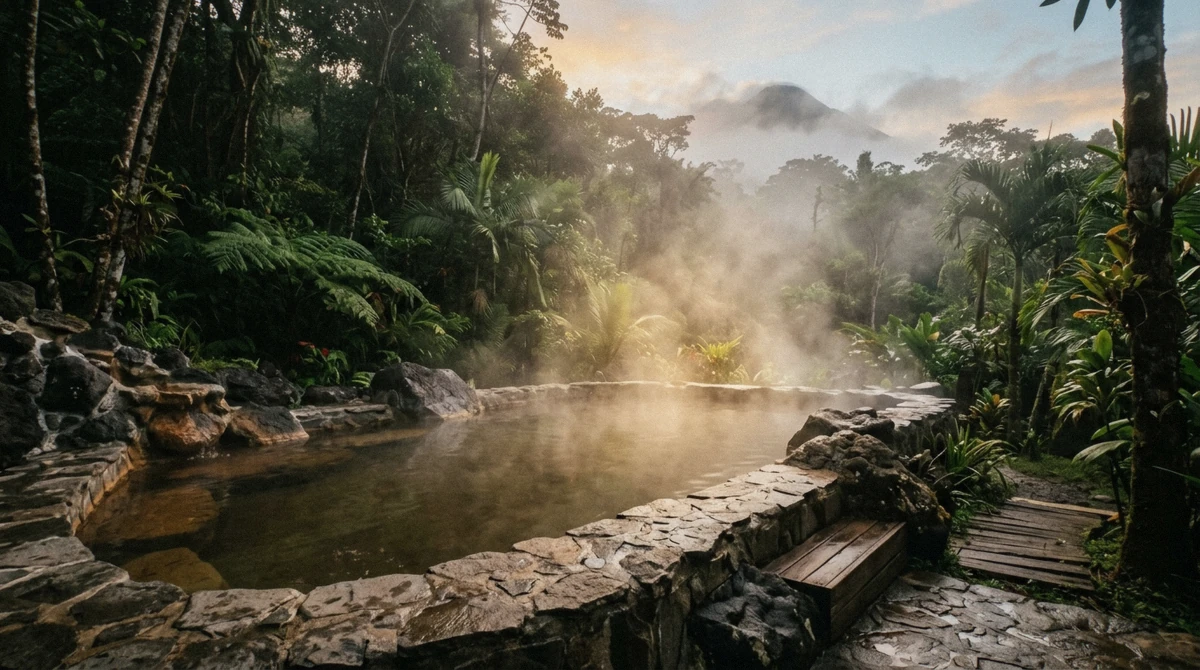
Early hours: empty water and the best steam. Illustrative image.
Quick answer
December through April is the drier season and the most popular window, with reliable skies and the biggest crowds. May to November brings afternoon rain, which most reviewers treat as part of the open-air soak experience, and the pools feel calmer. Daytime temperatures barely move all year, so no month is too cold or too hot for a soak. For quiet and value, aim for a green season morning on a weekday. For guaranteed sunshine and full resort services, book the dry season and expect company.
Key takeaways
- Rain rarely ruins a soak. The springs are open-air, and reviewers describe the afternoon showers as part of the experience.
- Baldi closes at 10 PM, so a long evening soak works in any season.
- The free Río Chollín stretch and the paid Pura Vida Thermal River & Thermal Pool Pass share the same volcanic water, and neither depends on a perfect forecast.
The Best Time for the Hot Springs: The Short Answer
La Fortuna has two seasons and one constant. The constant is the water. The springs here are heated by Arenal Volcano, and pools across the area hold bathing temperatures every day of the year.
Ecotermales keeps its shaded pools between 99 and 106 F. The Choyin thermal river runs above 100 F. Neither figure moves with the seasons.
The seasons change the sky, not the water. December to April is the drier season, so you can plan a full day outdoors with more confidence. May to November brings afternoon rain, which thins the crowds and cools the air in a way many soakers enjoy.
Reviewers describe the rain as part of the open-air experience rather than a problem.
So the honest answer is this. Any month works for the water. Pick the dry season if sunshine matters most to you and you do not mind sharing the pools.
Pick the green season if you value quiet, lower rates on rooms, and a soak under warm rain. Then pick your hour, which matters almost as much as your month.
Dry Season vs Green Season
Dry season, December to April
This is the peak window. Skies are clearer, trails are drier, and every tour on the catalog runs at full capacity. It is also when La Fortuna is at its busiest, so day passes at the capped properties can sell out.
Ecotermales caps entry per session, which protects the atmosphere but means you should book ahead in these months. Expect peak pricing at Tabacón, whose day access has recently read from about $115 to $180 per adult depending on season and package.
Green season, May to November
Rain arrives most afternoons, usually after a bright morning. Mornings and early afternoons stay very usable, and the rain itself is warm. The upside is real: fewer visitors, easier parking, more space in the pools, and resorts that feel relaxed rather than busy.
If your schedule is flexible, a green season trip built around morning soaks delivers the best of both worlds.
A side-by-side look
The table below lines up the catalog day passes so you can see what a soak costs regardless of when you come.
| Option | Price | Duration | Rating |
|---|---|---|---|
| Pura Vida Thermal River & Thermal Pool Pass | $29 | Valid 1 day from first activation | 4.8 (131 reviews) |
| Baldi Hot Springs Day Pass | $60 | Full day, resort closes 10 PM | 4.5 (219 reviews) |
| Zip Line & Thermal Pools Combo | $65 | About 2 hours of lines, pools until 5 PM | 4.7 (377 reviews) |
| Ecotermales Rainforest Hot Springs Day Pass | $81 | 6 hours, daytime pass 10 AM to 4 PM | 4.8 (78 reviews) |
| Arenal Volcano Hike & Thermal River Tour | $54 | 4 hours | 4.5 (55 reviews) |
| La Fortuna Waterfall, Volcano & Hot Springs Day Tour | $95 | 10 hours | 4.8 (3,848 reviews) |
None of these prices are seasonal in the catalog. The seasonal swings show up at Tabacón and in hotel rates, not in the fixed day passes above. That makes the passes a useful hedge: a $29 river pass costs the same in February as it does in October.
The honest detail is that neither season is bad for soaking, they are bad for different plans. Dry season delivers clear volcano mornings and predictable logistics, which is why its prices run higher and its pools run busier. Green season delivers the postcard-green rainforest, thinner crowds at the capped properties and afternoon storms that rarely last past dinner, and the hot water does not care that it is raining.
Travellers who book six nights or more can simply soak on the dry hours of a green-season day and lose almost nothing.
One more timing layer sits underneath the seasons: the holiday calendar. Christmas through the first week of January, Easter week, and the North American summer holidays of July pack the same pools that sit half empty in late November or early June. If your dates are fixed to a school holiday, the fix is timing rather than destination, an early-morning session or a night soak instead of the two-to-four window when the tour groups arrive.
Wildlife follows the same calendar. Dry-season visitors see more at the water sources, when birds and mammals crowd the shrinking streams, while green-season visitors get the migrations, the flowering trees and the frogs that make the evening walks famous. Neither window owns the volcano views outright, they just change the odds, and a soak day is forgiving of odds in a way that a summit hike never is.
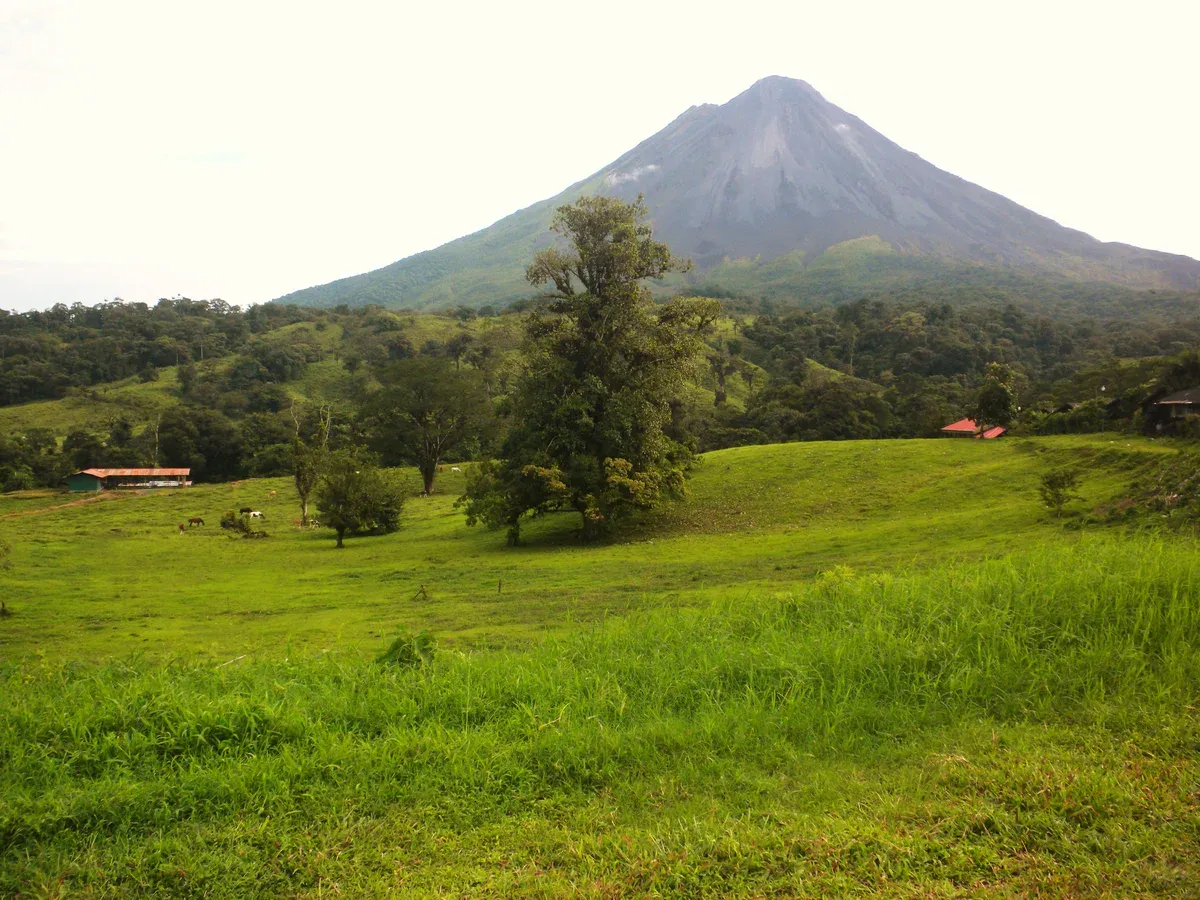
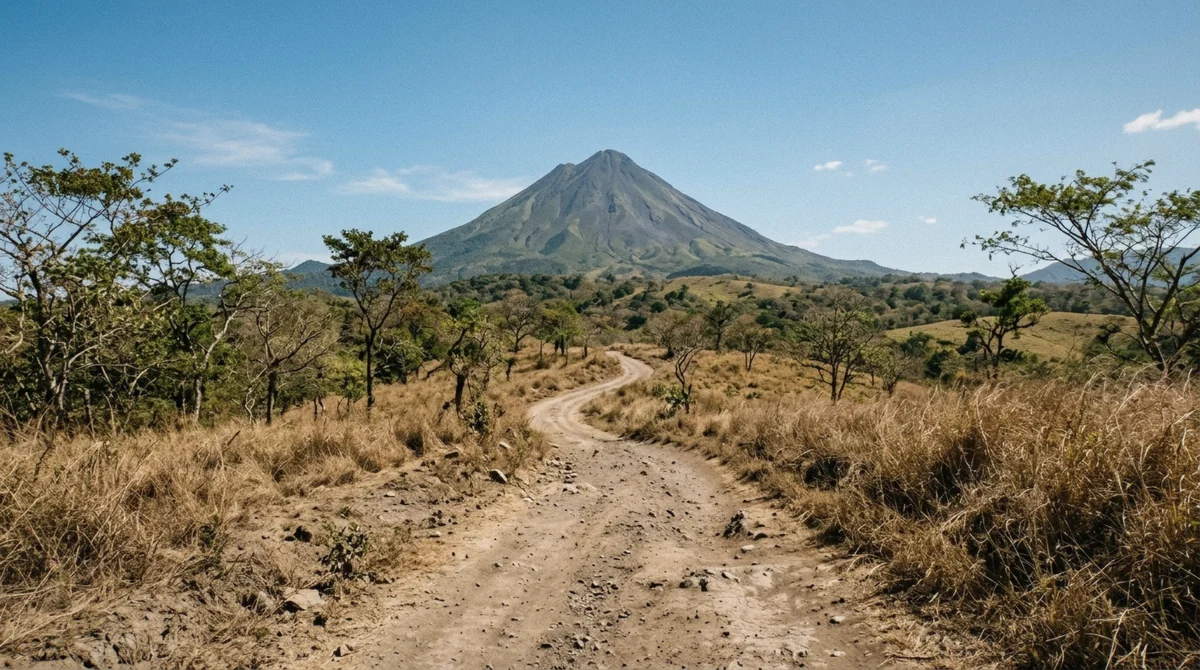
What the dry season buys you: the cone actually visible. Photo: belemita@gmail.com, CC BY 3.0, via Wikimedia Commons.
The Month-by-Month Picture
Costa Rica does not publish a month when the springs close or cool down. The grid below groups the year into the patterns visitors actually report, based on the two-season rhythm of the area.
| Months | Season character | What it means for a soak |
|---|---|---|
| December to April | Drier season, peak visitor months | Best odds of clear skies, busiest pools, book capped properties ahead |
| May to August | Green season, afternoon rain | Bright mornings, warm afternoon showers, thinner crowds |
| September to October | Deepest green season | The wettest stretch, the quietest pools, lowest room rates |
| November | Shoulder month | Rain tapering off, crowds building toward the dry season |
One caution about the volcano itself. Arenal entered its eruptive phase with the 1968 eruption and went quiet into a resting phase in 2010. There is no lava to see today in any month, so do not time a trip around volcanic activity.
The mountain is a backdrop, and the springs run on its heat regardless.
If you want to build a full day around the season, the La Fortuna Waterfall, Volcano & Hot Springs Day Tour stacks a waterfall hike, a volcano walk and a spring soak into 10 hours. In the green season, its included lunch and drinks land right around the time the afternoon rain tends to start, which is convenient timing.
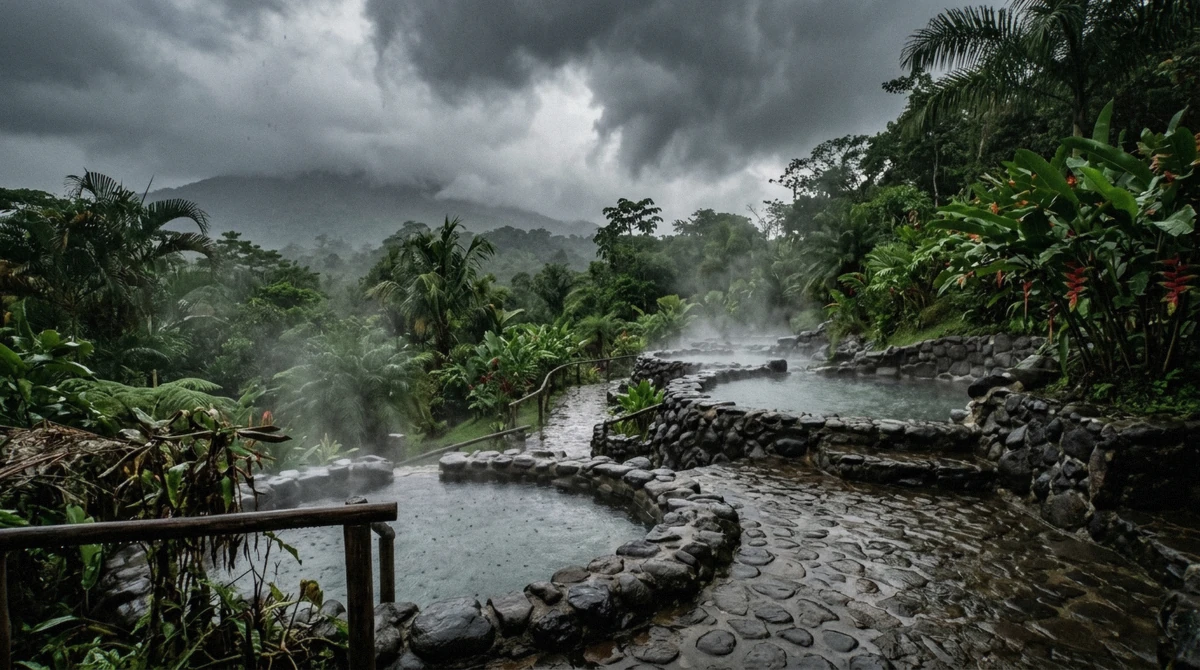
Green-season afternoons write their own schedule. Illustrative image.
The Best Hour of the Day
The hour matters more than the month. Mornings give you empty pools, soft light on the volcano and the coolest air of the day. In the green season they also give you the driest window, since afternoon rain is the pattern.
For photographers, morning is when Arenal Volcano is most likely to show its top before clouds build.
Afternoons are the social hours. The big resorts fill up, the bars open, and the atmosphere turns lively. Drinks inside the resorts run resort prices, with one guide counting cocktails at $15-25 and beers at $7-8 at Baldi.
If you want the party version of a hot springs day, late afternoon into evening is it.
Evenings are underrated in every season. Baldi closes at 10 PM, so you can soak under the stars for hours after dinner if you like. Ecotermales runs its daytime pass from 10 AM to 4 PM, so it is a morning-to-afternoon property rather than a night one.
The zip line combo keeps pool access until 5 PM, which suits a morning of lines and an afternoon of heat.
A simple schedule that works in any season
Start early. Soak from opening, have lunch on site or in town, then decide based on the sky. Clear afternoon means more pool time.
Dark clouds mean a spa treatment, an early dinner or a short drive back to town. The free Free Hot Springs in La Fortuna: Río Chollín and El Salto stretch sits about 15 minutes west of downtown and works well as a flexible, no-booking stop.
Night changes the format entirely. The wild river stretches cost nothing to warm and feel strongest in the dark, and reviewers of the ticketed river repeatedly say the same thing, that the grounds empty out and the steam reads twice as thick after sunset. The resorts run the opposite pattern, quiet at opening and social by late afternoon, which is why the honest answer to the best hour is that mornings belong to the resorts and nights belong to the rivers.
However the hours shake out, keep one boundary in place: the drive between town and the springs is short but the properties are spread out, so a plan that crams three venues into one evening spends it in a van. Pick the hour that fits the water you actually booked, and let the rest of the schedule breathe around it.
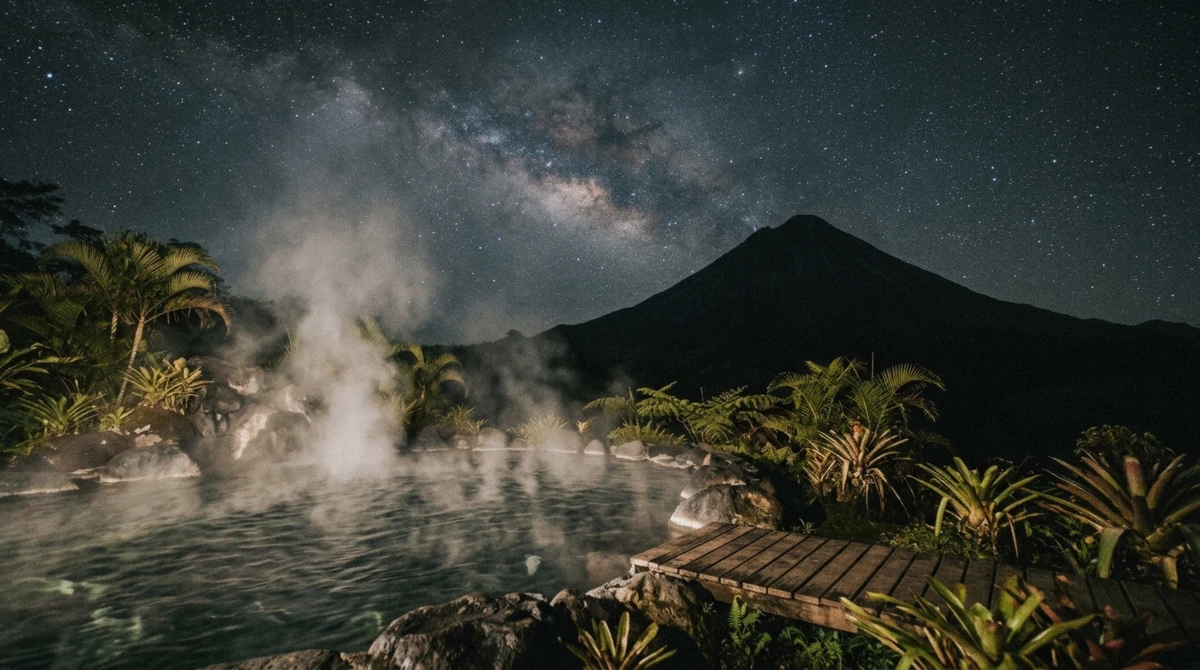
The night soak, on a clear dry-season evening. Illustrative image.
Weekends, Holidays and Crowds
La Fortuna draws Costa Rican weekenders as well as international visitors. That means Saturdays and Sundays are busier at every property, and local holiday weekends are the busiest days of the year. In the dry season this effect stacks on top of peak international travel, so a dry season Saturday at a big resort can feel like a water park.
The capped properties are your pressure valve. Ecotermales caps entry per session, which keeps the garden quiet even on busy weekends, but you must book ahead. The small thermal river options absorb crowds differently, since the river itself has no fixed capacity in the same way.
Weekday mornings in the green season are the quietest combination the area offers. If your dates are flexible, shift your soak days to Tuesday through Thursday and keep weekends for the volcano hike or the waterfall, where a few more people matter less.
- Book capped properties (Ecotermales) several days ahead in the dry season and on holiday weekends.
- Choose weekday mornings for the emptiest pools in any season.
- Treat big resorts like Baldi as evening venues on weekends, since they run until 10 PM and thin out after dinner.
- Use the free Río Chollín stretch as a daylight stop, and go with company since it is unsupervised and unofficial.
Visitors who find the town too touristy are usually describing the strip of restaurants around the central park at seven in the evening, not the pools. The springs themselves spread people out, and the capped properties enforce calm by design. Head ten minutes in any direction and the town's tourism reads as convenience rather than crowding.
Visitors who find the town too touristy are usually describing the strip of restaurants around the central park at seven in the evening, not the pools. The springs themselves spread people out, and the capped properties enforce calm by design. Head ten minutes in any direction and the town's tourism reads as convenience rather than crowding.
Dry season pairs soak days with hike days. Illustrative image.
Booking Around Your Dates
Match the pass to the season and the hour you want. The daytime rules matter here. Ecotermales requires biodegradable sunscreen and bans drones, outside food and smoking, with an optional meal ticket and free parking.
The zip line combo requires closed-toe shoes and has no refunds inside 48 hours, so check the forecast before you lock in a green season date. Baldi's listing states a $20 per-person security locker charge, and reviewers note towel deposits taken in cash.
For a half-day structure in any season, the Arenal Volcano Hike & Thermal River Tour pairs a 2.5-hour guided walk at the volcano's base with a soak in the thermal river, all inside 4 hours. The morning option includes a casado lunch, which fits the dry-morning pattern of the green season perfectly.
Families and adrenaline seekers have clear seasonal picks too. The Zip Line & Thermal Pools Combo works best on a dry morning, since seven zip lines over the Arenal River canyon are less fun in heavy rain. The Baldi Hot Springs Day Pass is the all-weather option, with 25 pools, waterslides and a 10 PM close that shrugs off an afternoon shower.
If you are torn between the two big resorts, Tabacon vs Baldi Hot Springs: Which to Book breaks down the choice, and Are the Arenal Hot Springs Worth It? The Honest Verdict gives the broader picture.
Park time factors in as well. Arenal Volcano National Park entry runs about $15 per adult foreign visitor per current visitor reports, and the park's official SINAC page lists current rates. If your dates fall in the dry season, add the hike before your soak.
If they fall in the deep green season, do the hike first thing in the morning and treat the springs as the reward.
Finally, pack for the pattern rather than the forecast. A light rain shell, water shoes for the rocky river entries, biodegradable sunscreen and a dry bag cover every month of the year. The full checklist lives in What to Bring to the Arenal Hot Springs: Packing List.
Book the capped and combo options ahead, keep one afternoon flexible for weather, and any month you choose will deliver a hot soak.
The cancellation terms decide how much weather-planning is worth doing. Five of the listings compared here in our catalog cancel free up to 24 hours ahead, which turns green-season booking into a low-risk bet: pick the dates, lock the pool, and reshape if the forecast turns dramatic. The one exception is the zip line combo and its 48-hour refund line, so sequence the firmest commitment for the clearest-forecast day and leave the free-cancel soaks flexible.
Questions Readers Ask Next
Which hot springs in La Fortuna offer the best day pass?
It depends on what you want from the day. The Pura Vida Thermal River & Thermal Pool Pass is the budget pick at $29 for a day on a real thermal river. Baldi offers the biggest resort spread at $60, and Ecotermales is the quiet capped garden at $81 for a 10 AM to 4 PM session.
When is the worst time to visit Costa Rica?
There is no month when the hot springs close or cool down, so worst is a matter of taste. September and October sit in the deepest green season, with the most afternoon rain and the quietest pools. Travelers who want guaranteed sun tend to avoid that stretch, while budget travelers often seek it out.
How many days do you need for La Fortuna?
Two to three full days cover the area comfortably. One day handles a combined outing such as the La Fortuna Waterfall, Volcano & Hot Springs Day Tour, which runs 10 hours. A second day leaves room for a relaxed soak and a volcano hike without rushing.
Is Arenal too touristy?
The town and the big resorts are busy, especially on dry season weekends and holidays. The crowds concentrate in a few places and at certain hours. Weekday mornings, capped properties like Ecotermales, and the thermal river stretches all feel far quieter than a peak Saturday at a large resort.
Are the hot springs better in the morning or at night?
Morning gives you empty pools, cool air and the best chance of a clear volcano view. Night gives you stars, cooler air and a calmer resort, and Baldi stays open until 10 PM to make it easy. In the green season, morning also beats the daily afternoon rain.
Does rain ruin a hot springs day?
Rarely. The springs are open-air, and reviewers describe the afternoon rain as part of the soak rather than a problem. The water stays hot, the air stays warm, and the main adjustments are practical, such as a dry bag for clothes and booking indoor-adjacent facilities like Baldi's 25 pools.